 Northern Prairie Woodworks
Butcher Block vs. Cutting Board: What’s the Difference?
People use “butcher block” and “cutting board” as if they’re the same thing. They’re not — and the difference comes down to two things: mass and grain.
A cutting board is light, thin, and made to be picked up, rinsed, and tucked away. A butcher block is heavy, thick, and built to stay put while you work — to sit still under a cleaver and survive years of real cooking. Both have a place in a working kitchen. Knowing which one you actually need saves you money and a lot of frustration.
What makes a butcher block a butcher block
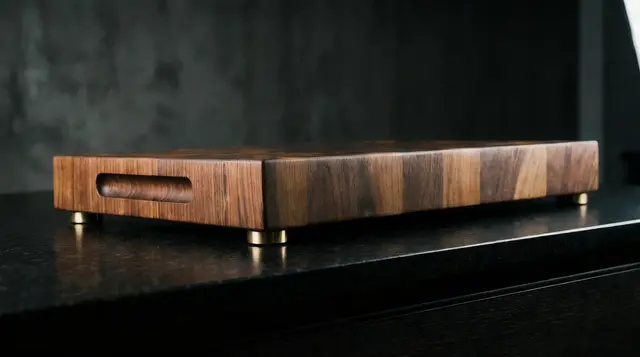
The line most people draw is thickness, and that’s a fair start. Everything in our end grain butcher blocks begins at a full 1.5 inches and goes up from there. Below that, you don’t have the mass to absorb a heavy chop — the board slides, bounces, and wears out. Above 2 inches you’re into restaurant-grade territory: heavy enough to live permanently in one spot, sized for breaking down a whole turkey or a side of beef.
But thickness alone isn’t the whole story. A true butcher block is usually built end grain — the wood fibres stand vertical, so the surface shows the cross-section of the tree rather than its side. Those vertical fibres take a knife edge instead of fighting it. The blade stays sharper, and the surface closes back up between cuts instead of scarring. We go deeper on this in why end grain matters.
Where a cutting board still wins
None of this means a cutting board is the lesser tool. For everyday slicing — herbs, fruit, a quick sandwich — a lighter cutting board is exactly right. It’s easy to lift, easy to dry, easy to bring to the table for a charcuterie spread. Most kitchens are happiest with both: a thinner board for quick jobs and a thick block for the heavy prep.
The trouble starts when you ask a thin board to do a block’s job. Try to break down a chicken on a flimsy board and you’ll feel it skid, and the wood will check and warp long before its time. Match the tool to the task and both will last for decades.
Choosing the wood
Maple runs bright and is the classic blank canvas. Walnut runs dark — chocolate tones, deep grain, a quiet presence on the counter. Acacia runs dense and stands up to the hardest daily prep. All three make excellent blocks; the right one comes down to the kitchen it’s going into. Every block we build is one of one, so when one ships, that exact piece is gone.
Making it last
Whichever you choose, the care is the same and it’s simple: wash with warm soapy water, dry it flat, and never let it soak. Condition it with a board-safe finish — our Board Butter is made for exactly this — monthly for the first season, then every quarter. A well-cared-for end grain block doesn’t last years. It lasts decades, and thanks to its thickness it can be resurfaced and passed down.
So which do you need?
If you do real cooking — breaking down proteins, heavy chopping, anything that wants a stable surface — get the butcher block. If you mostly want something light for quick jobs and serving, a cutting board is the better fit. Most serious kitchens end up with one of each.
Either way, buy it once and buy it well. A solid, handmade block is the kind of thing that outlives the kitchen it starts in. Browse the current end grain butcher blocks — each one handmade in Virden, Manitoba, and built to be passed down.
Not seeing the piece you're picturing?
Memento boxes, shadow boxes, a board built around a shape, a custom-sized Compass block — most of what leaves this shop started as someone reaching out. Tell me what you have in mind and I'll come back with ideas and a price. No payment, no account.
Tell me what you're picturing →